
 EN

Remote-Controlled Slope Mowers for Steep Orchards and Embankments
How to cut banks safely, size the machine correctly, and recover the cost in two seasons.
Key takeaways
■Steep banks are the highest-cost, highest-risk ground on most orchards and public sites.
■A tracked remote-controlled mower keeps the operator off the slope and cuts grass and brush in one pass.
■Match deck, width and drive to the gradient, then check parts support before price.
Steep Ground Is the Most Expensive Grass You Own
On an orchard terrace, a reservoir bank or a motorway embankment, the acre that costs most to maintain is rarely the flat one. A 30° bank cannot be cut with a ride-on mower and will not hold a compact tractor safely. So it is pushed to the end of the schedule, and by midsummer the growth is waist-high and woody. At that point it is no longer a mowing job but fire-risk management and a compliance note waiting to be written.
The default answer is a crew with brushcutters. It works, but a two-person team clears only 1,500 to 2,500 m² of heavy bank a day, and puts people on exactly the surface where one slip ends in hospital. Herbicide use is restricted near watercourses, and open burning is banned across most of Europe and North America. Growth does not wait for any of it: in a wet spring, grass on a bank puts on 30 to 50 mm a week.
What a Remote-Controlled Slope Mower Actually Does
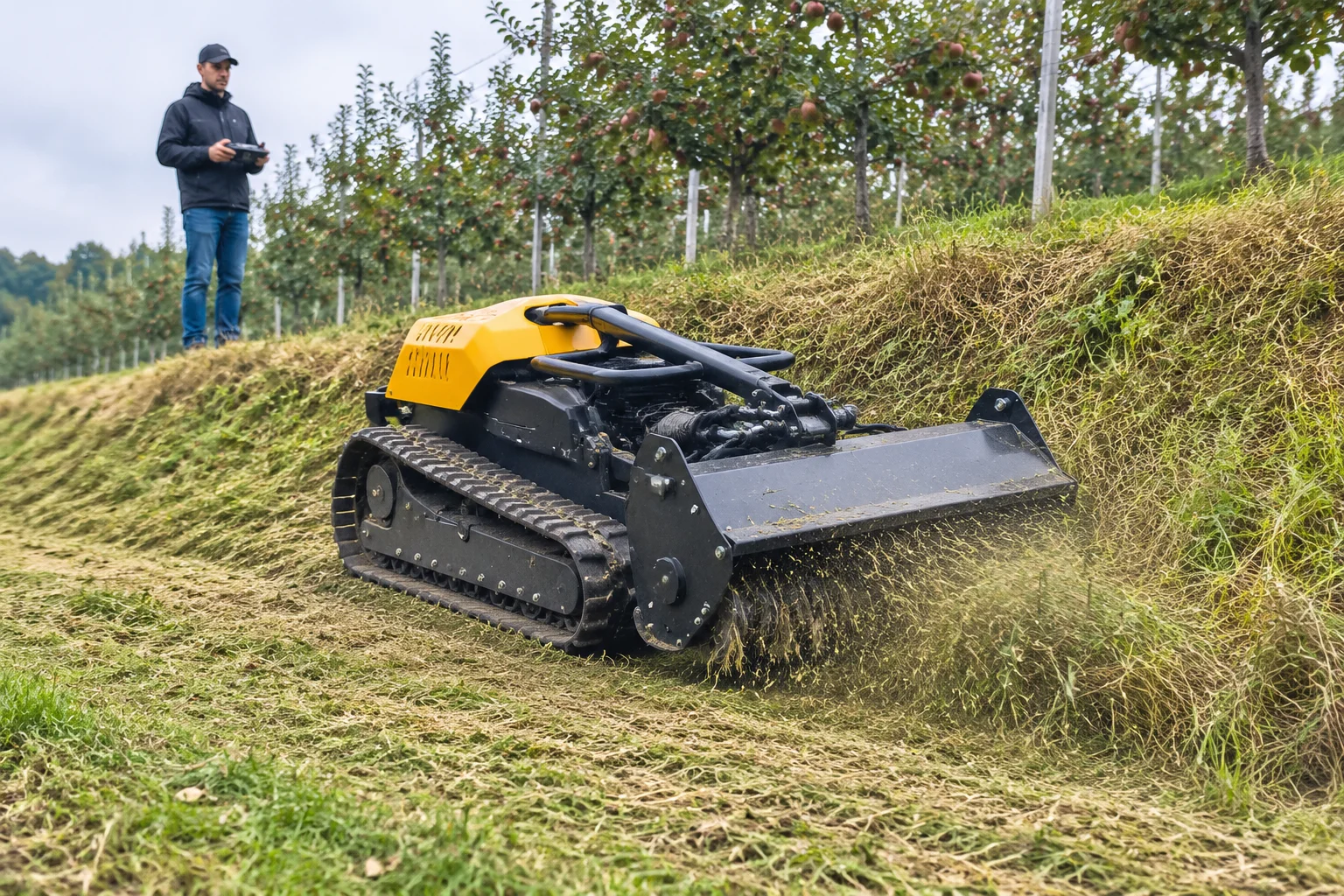
It is a low-profile tracked chassis carrying a flail or rotary deck, driven by its own engine and steered from a handheld transmitter. There is no seat and no operator sitting high on the machine. The centre of gravity stays a few hundred millimetres off the ground, and the tracks spread the load so the surface stays intact. The operator stands on the headland and works the slope by remote.
Control range is typically 100 to 200 m in line of sight. A floating deck follows uneven ground, and an emergency stop plus tilt protection shut the machine down the moment it loses attitude. A job nobody wanted becomes a routine pass one person finishes before lunch.
Product Highlights: What Matters in a Slope Mower
The KESEN slope mower range is built around the four constraints that decide whether the machine earns its keep: gradient, vegetation, access and uptime.
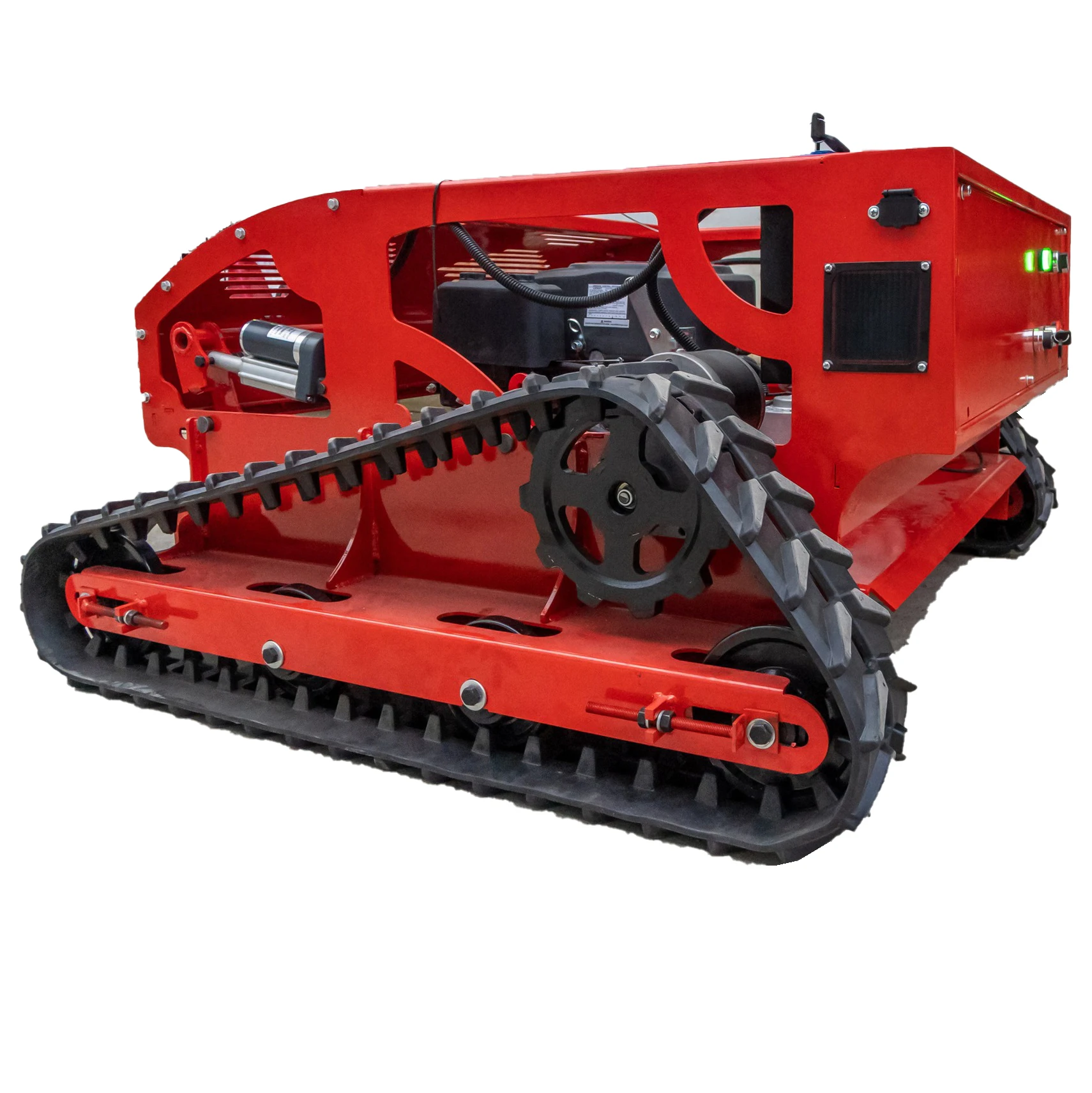
Tracked chassis, low centre of gravity
Wide rubber tracks hold the working slope, spread ground pressure and keep traction on dew-wet grass. Independent left and right control lets the machine turn in place at the top of a bank.
Remote control that keeps the operator out of the risk zone
Proportional joysticks on a 100 to 200 m link, with emergency stops on both the transmitter and the machine body, and tilt protection that cuts the engine automatically.
A deck matched to the vegetation
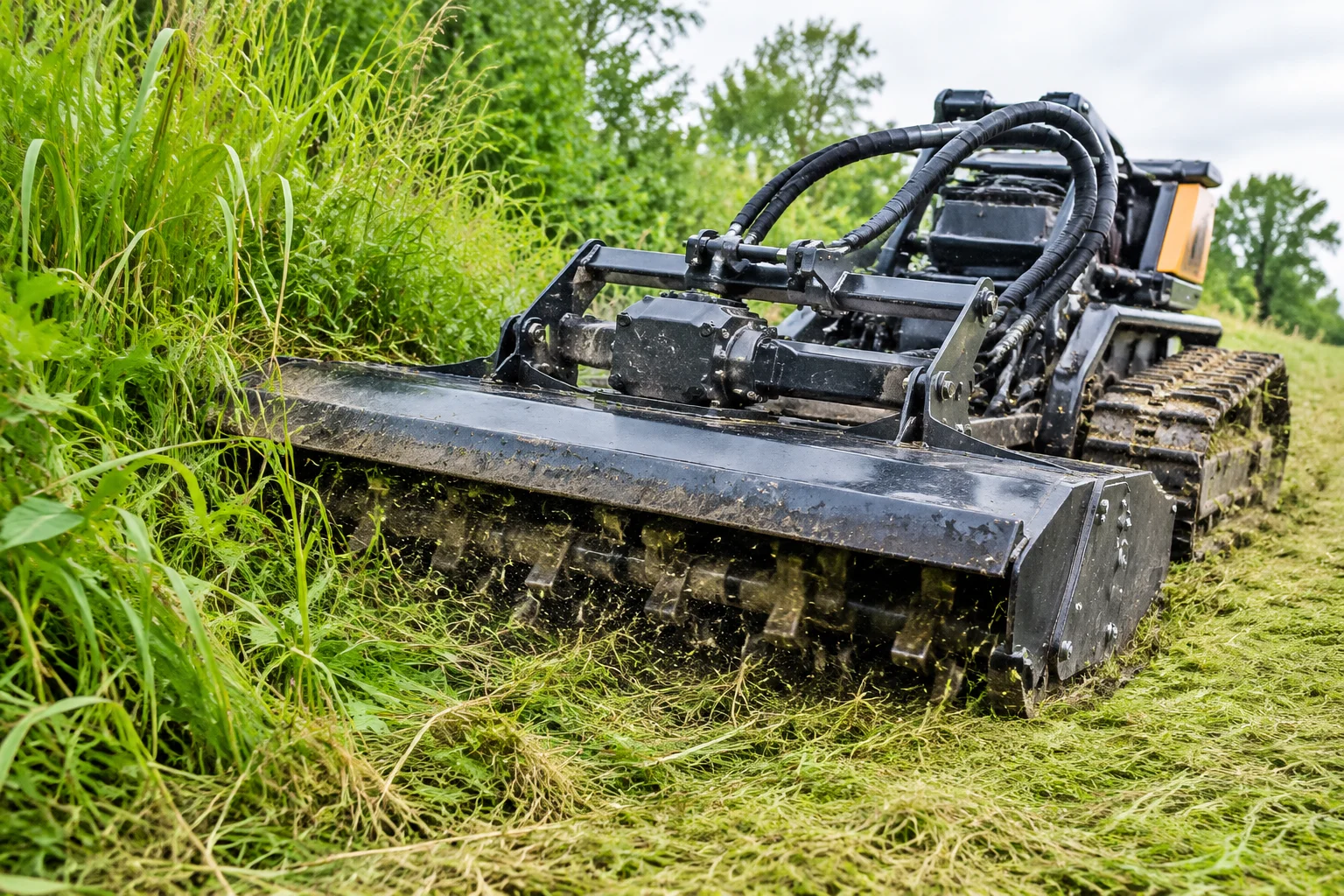
Flail decks with hammer or Y-blades take dense grass, weeds and light brush up to about 30 mm in diameter. Rotary decks give a finer finish on amenity turf, and a floating deck with a slip clutch protects both blades and driveline on stony ground.
Independent power, no tractor required
A 7 to 15 kW petrol or diesel engine goes where a tractor physically cannot, and takes a second machine and a second operator out of the job.
Service access designed for daily use
Bolt-on decks, grouped grease points, external track tension adjustment and reversible blades keep turnaround short. Ask about knife and hose lead times before you buy, not during peak season.
Sizing the Machine to the Slope
Buying on price alone is how contractors end up with a mower that cannot hold the bank it was bought for. Four measurements settle the specification.
Measure the real gradient. Put an inclinometer on the steepest ten metres. A bank averaging 20° usually contains a 35° section, and that section sets the specification.
Size width against output. Effective output is roughly cutting width times forward speed, minus 30 percent for turns and overlaps. A 1,000 mm deck at 3 km/h is about 2,000 m² per hour in clean grass; halve it for heavy brush.
Match the deck to the material. Grass and weeds: flail or fine-cut rotary. Bramble, bracken or saplings: a heavier flail with hammer blades. Stony ground: floating deck, slip clutch and lower blade speed.
Check the drive, the brake and the backup. Hydraulic track motors hold a side slope, and the parking brake must hold the machine on your steepest bank with the engine off. Confirm CE and EPA compliance where applicable, a manual in your language, and wear parts delivered inside a week.
Specification at a glance
| Parameter | Typical range for this machine class | What it means on site |
|---|---|---|
| Working gradient | Up to 35–45°, model dependent | A 20° average bank usually hides a 35° section. That section, not the average, sets the specification. |
| Cutting width | 800–1,200 mm | About 2,000 m²/h in clean grass at 3 km/h; halve the figure for heavy brush. |
| Engine | 7–15 kW, petrol or diesel | Independent power: no tractor, no PTO, no second operator on the slope. |
| Deck type | Flail or rotary, floating | Flail takes grass and light brush to 30 mm; rotary gives the finer amenity finish. |
| Control range | 100–200 m, line of sight | The operator works from the headland, outside the slip and fall zone. |
| Machine weight | 150–400 kg | Low ground pressure on wet or terraced ground, and trailerable behind a pickup. |
Typical envelope for this machine class — confirm every figure against the model datasheet before ordering.
Swipe the table sideways on mobile to see all three columns.
Four Habits That Protect the Machine and the Operator
1. Walk the slope before the first pass and remove wire, stones and irrigation risers. A thrown stone costs more than a blade.
2. Take the first pass downhill, then work cross-slope in overlapping strips so the deck stays evenly loaded.
3. Slow down in tall grass and let the deck clear. Full speed through waist-high growth overheats the hydraulics and produces a ragged cut.
4. Check blade torque and track tension weekly, park clean and dry, and never operate from a position where you cannot see the machine.
The Payback Calculation
An illustrative case at European rates — substitute your own. One 12,000 m² embankment, cut four times a season. A two-person brushcutter crew clearing 2,000 m² a day needs six crew-days per cut, so 48 worker-days a year. At €180 to €250 per worker per day, that single bank costs €8,640 to €12,000 in labour alone.
A tracked slope mower covers the same bank two to three times faster with one operator on level ground, and keeps working in a wet spring when a hand crew cannot stand on the slope at all. Most buyers see payback inside one to two seasons, with the released labour moved to higher-margin work.
A slope mower is not a machine you buy to cut grass faster. It is a machine you buy to stop sending people onto ground that can hurt them — and the labour saving is the receipt.
Where This Machine Fits
The strongest fit is any site with repeating steep maintenance and no safe tractor access: orchard banks, canal embankments, road verges and quarry margins.
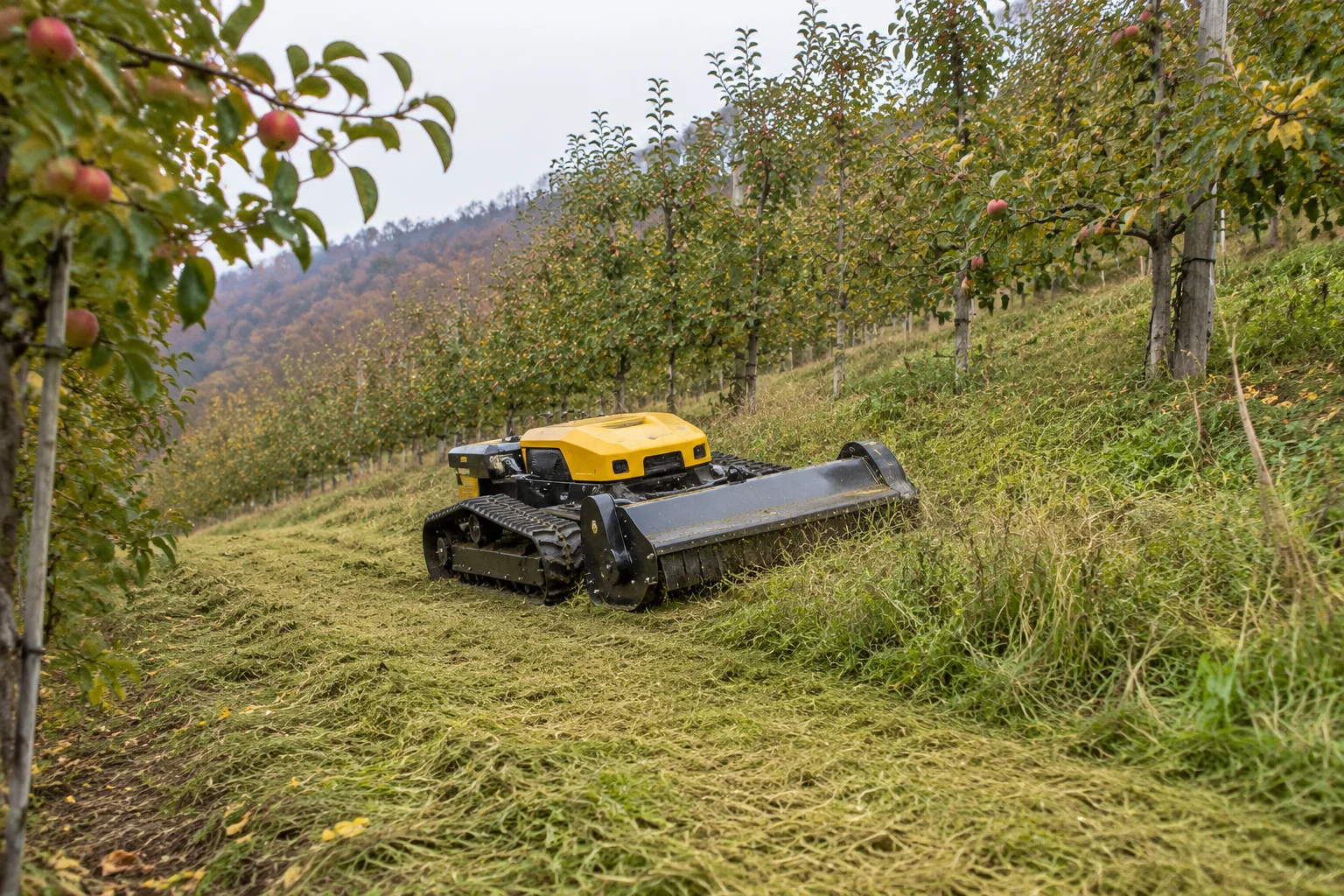
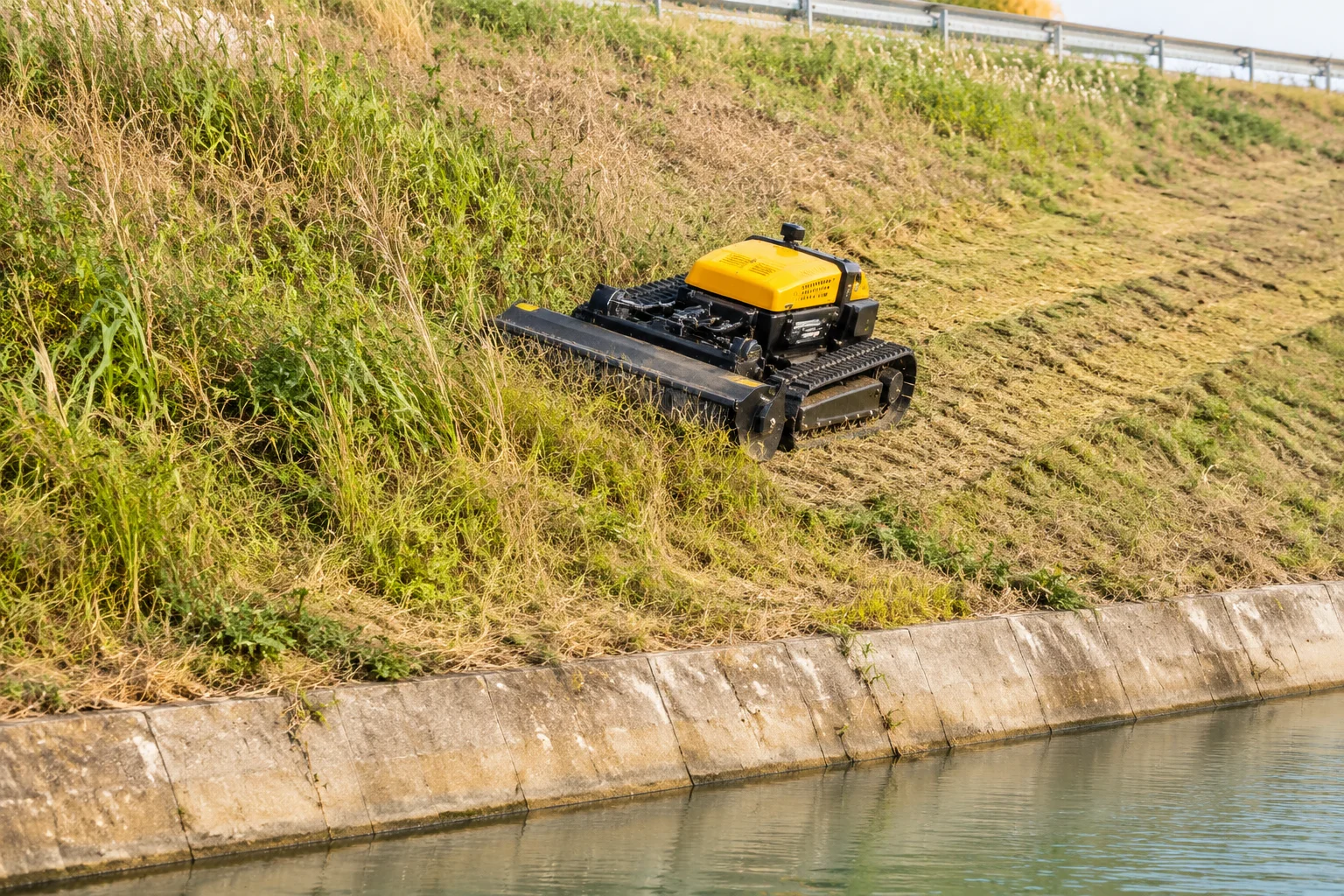
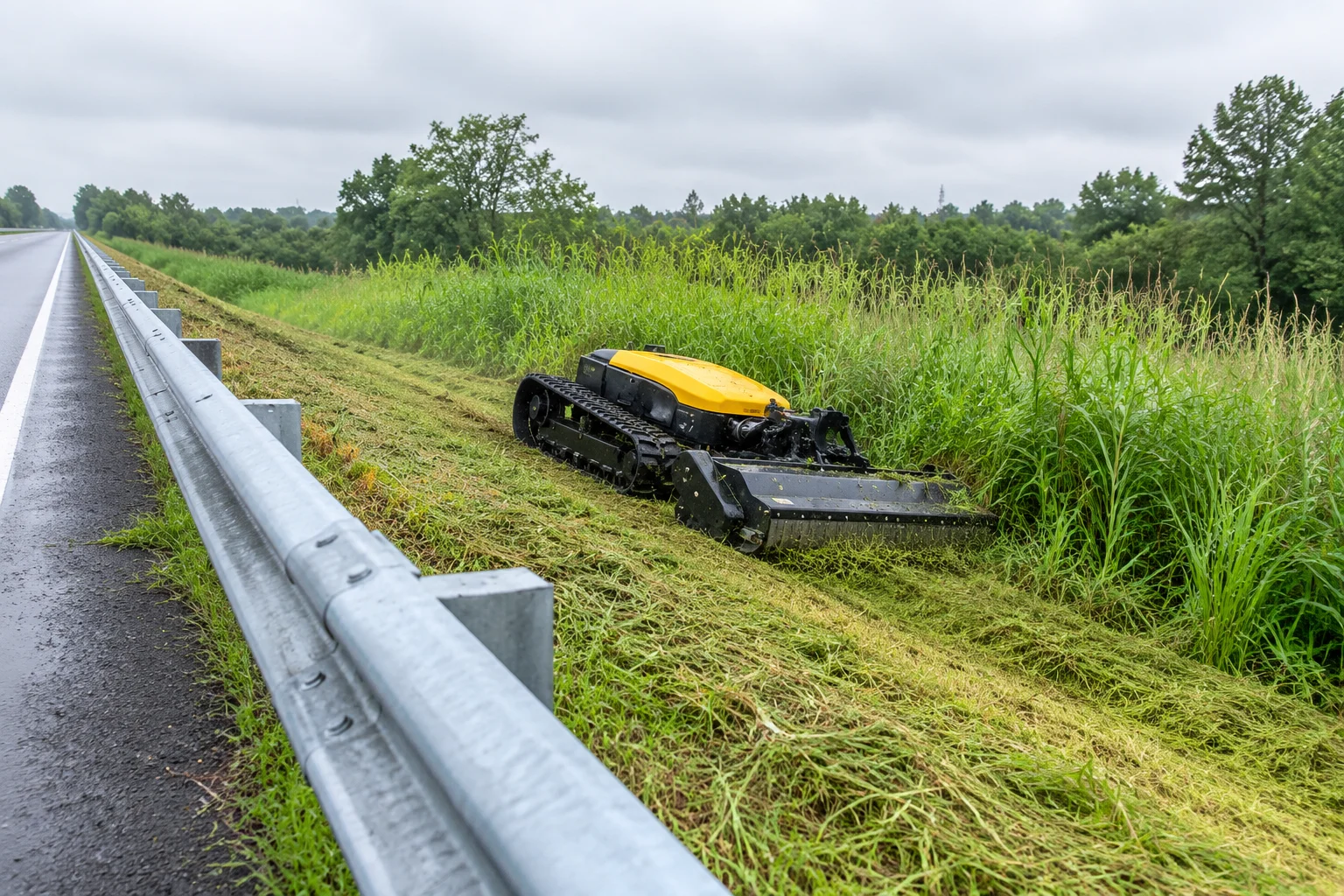
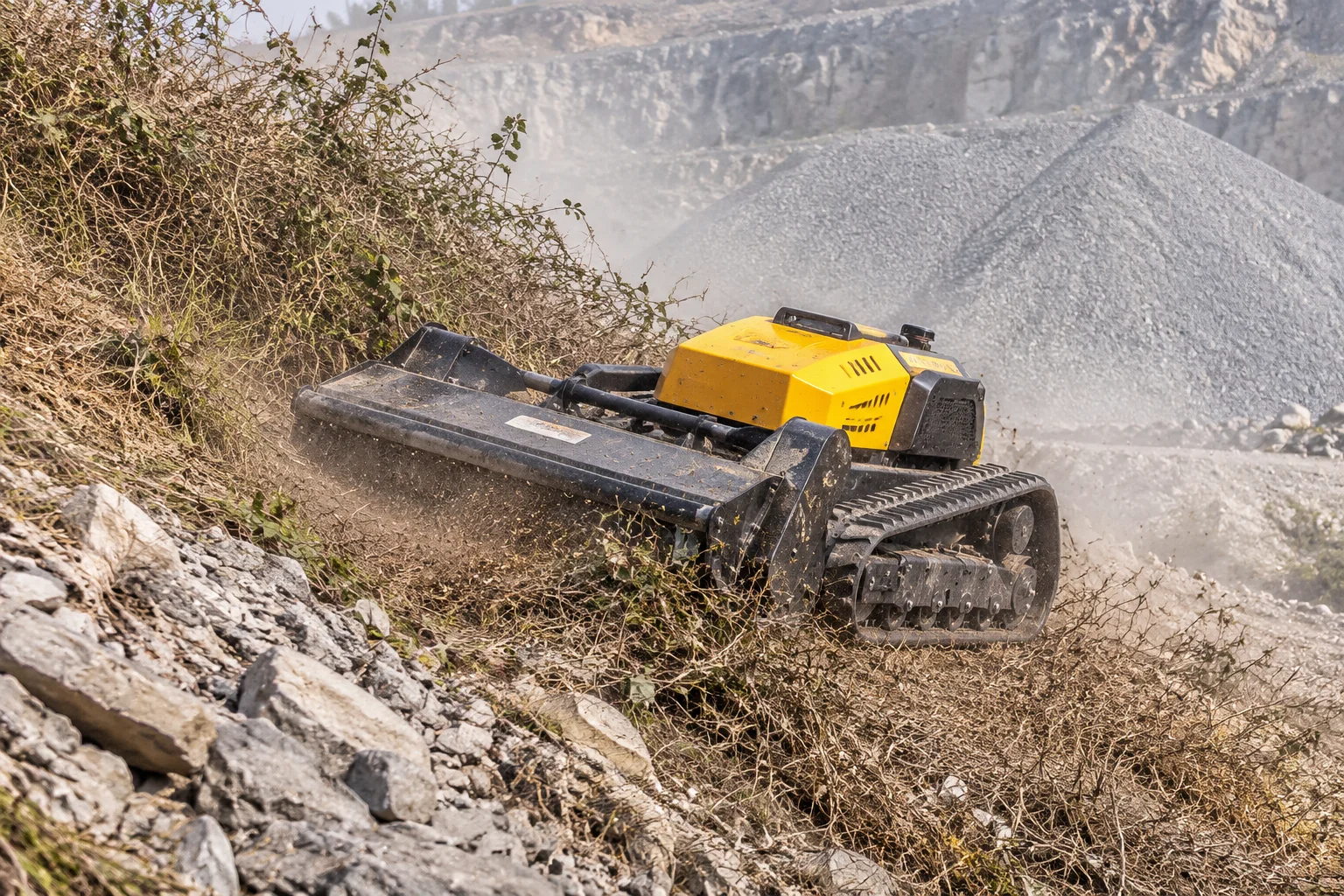
Every machine in the KESEN garden and grounds range is built for daily commercial use, with wear parts in stock and documentation in your language. Send us your gradient, area and vegetation and we will specify the configuration that fits the site.
Configuration support
Tell Us Your Gradient — We’ll Specify the Machine
Send your slope angle, working area and vegetation type. We reply with a deck, width and power recommendation, a price, and a delivery date — usually within one working day.
Request a configuration & quoteDirect factory sourcing · CE / EPA compliant · Wear parts in stock
Prefer to browse first? See the slope mower range and download the specification sheet ›
KESEN
Built for the ground your tractor cannot reach.

 Hot News
